
TECH
The 60 AP Ceiling Just Broke - What RF-DETR and YOLO26 Mean for the Jogos de CFTV Engine
RF-DETR became the first real-time detector to cross 60 mAP on COCO in 2026. YOLO26 still owns edge inference. Here's what the object detection race means for the CCTV games count.
Informação de origem
Situação: Editorial
Fonte primária: equipe editorial cctvgames.global
Last updated: 2026-07-06
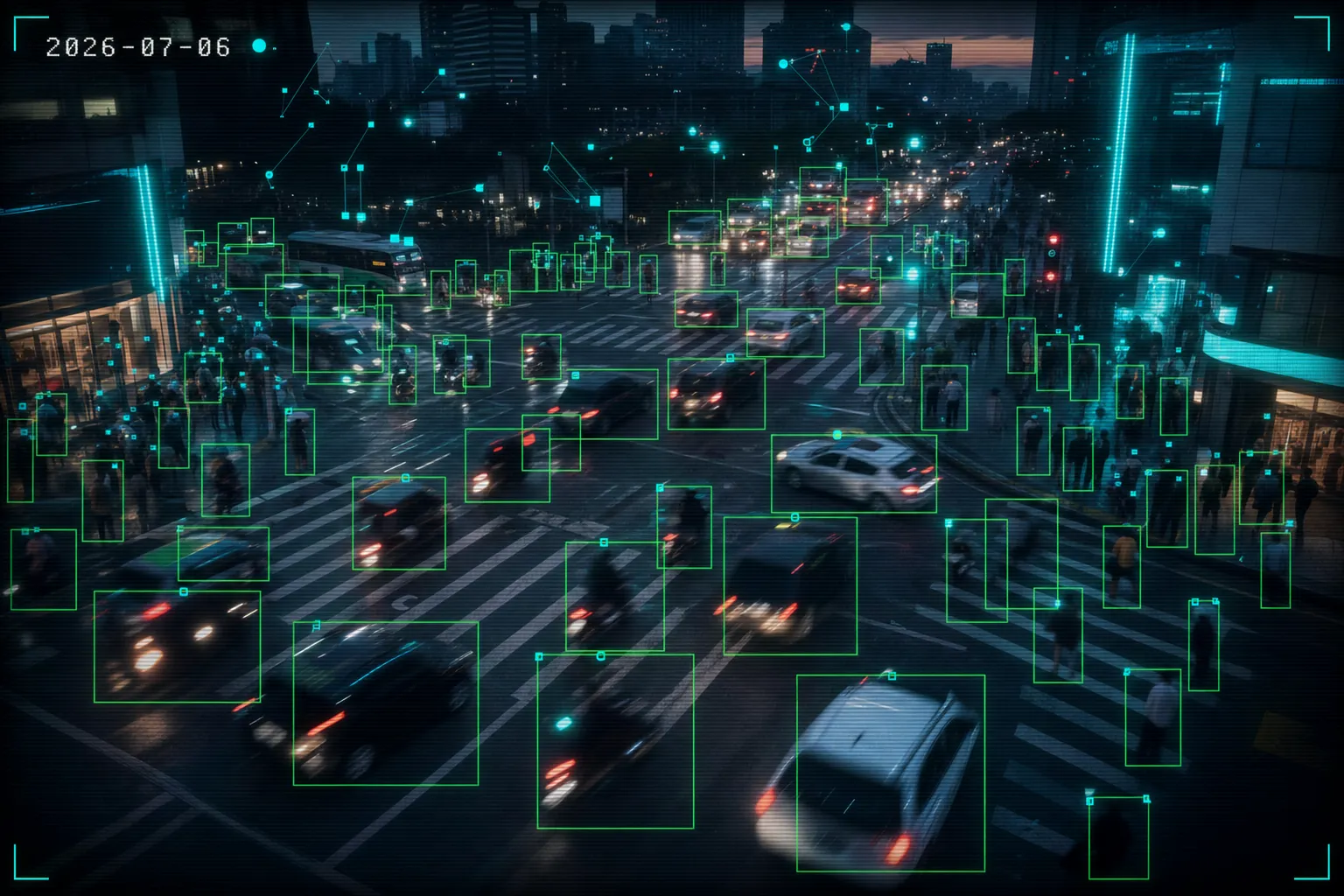
The object detection race broke a real ceiling in the first half of 2026. RF-DETR, the transformer detector from Roboflow, became the first real-time model to cross 60 mAP on COCO - its 2XL variant reaches 60.1, e even the Nano hits 48. YOLO26, the model class the CCTV games engine has been running on since Ultralytics shipped it in September, still owns the edge and CPU crown. The interesting question for the CCTV games category is not which model wins the benchmark. It is which one wins the count.
Where the state of the art actually sits
Two headline numbers from the 2026 benchmark refresh. First, RF-DETR-M reaches 54.7% mAP on COCO at 4.52ms latency on a T4 GPU, e 60.6% on the RF100-VL domain adaptation benchmark, according to Roboflow's 2026 model comparison. Second, YOLO26 ships 40.9 to 57.5 mAP across its variants at 1.7 to 11.8ms T4 latency and reports roughly 43% faster CPU inference than YOLO11, per the Ultralytics YOLO26 paper. RF-DETR wins the accuracy contest. YOLO26 wins the "runs on a Jetson Nano" contest.
The pure accuracy record still sits with Co-DETR at 66.0 AP on COCO test-dev, but that is a research-grade model that does not run in real time, per Hitech BPO's 2026 model survey. CVPR 2026 also brought YOLO-Master, a mixture-of-experts variant, which the CVPR 2026 notes record at 42.4% AP with 1.62ms latency - a full 18% faster than YOLOv13-N at higher accuracy.
Why the CCTV games engine chose YOLO26 - and why that might change
As we covered in the YOLO26 upgrade piece, the CCTV games engine moved to YOLO26 for four reasons - end-to-end NMS-free inference removed post-processing latency, small-target-aware label assignment improved duck and skier detection, ProgLoss gave stable convergence on noisy CCTV footage, e o MuSGD optimiser survived the reality of real-world lighting. Those choices still hold. But the RF-DETR result changes the ceiling.
The trade-off for CCTV games is not the same as the trade-off for a robotics team or a factory line. The count runs server-side on cloud GPUs, not on the camera. The proof frame is what matters, not the inference budget. That means the RF-DETR argument - transformer architecture, better domain generalisation, higher accuracy on occluded objects - is more compelling here than in most production deployments. Hora do Rush on a busy Bangkok junction is exactly the "small, crowded, partly occluded" case RF-DETR is designed for.
What upgrade to RF-DETR would actually change
Three concrete things. First, higher counts on dense frames. RF-DETR's Nano variant beats D-FINE Nano by 5.3 AP at similar latency, which for a CCTV game means fewer missed cars and fewer disputed frames. Second, better small-object handling on Rio Pato and Corrida na neve, where the target objects are small relative to the frame - RF-DETR's transformer attention head is stronger on that pattern than YOLO26's CNN backbone. Third, better cross-camera generalisation. The RF100-VL benchmark measures exactly this - the ability to move from one visual environment to another without retraining. For a category that ships new locations, that number matters.
The trade-off is inference cost. RF-DETR runs about three to five times more expensive per frame than YOLO26 at comparable accuracy. If the engine is CPU-bound or edge-bound - which the CCTV games video pipeline is not, since the count runs on cloud GPUs - that matters. It probably does not for 155.io. It probably does for competitors that try to run the count on the streaming rig itself.
What to watch
Two things. First, whether 155.io publishes a benchmark comparison between the current YOLO26-based engine and a transformer alternative on Hora do Rush Bangkok, Londres, ou Tóquio footage. That is the honest test - not COCO, but a real feed. Second, whether the glass-box AI direction we wrote about in June accelerates - RF-DETR's attention heads are more interpretable than YOLO26's CNN feature maps, which matters if regulators or players ask why a count is what it is.
The 60 AP ceiling breaking in 2026 is a real thing. It will show up in the CCTV games engine at some point. When it does, the count gets tighter, disputes get quieter, e o proof frame gets stronger. Responsible play still applies - the format is fast, the rounds are short, set a session limit before you start.
O jogo envolve riscos – nunca aposte mais do que você pode perder.
Mais notícias