
INDUSTRY
The AI That Counts Your Cars: How YOLO Powers CCTV Games
155.io's CCTV games run on YOLO object detection - the same AI architecture powering self-driving cars and casino surveillance floors. Here's how the engine works and what it means for players.
Source Information
Status: Editorial
Primary source: cctvgames.global editorial team
Last updated: 2026-04-06
155.io's CCTV games are not a camera gimmick - they run on the same class of AI object detection used in self-driving cars, sports analytics, and casino surveillance floors worldwide. The engine counting your vehicles in Rush Hour is a descendant of YOLO: You Only Look Once.
What YOLO Actually Does
YOLO is a family of deep learning models built for real-time object detection. The name describes the core innovation: unlike earlier approaches that scan an image multiple times looking for regions of interest, YOLO processes every frame in a single pass. One look. Instant output.
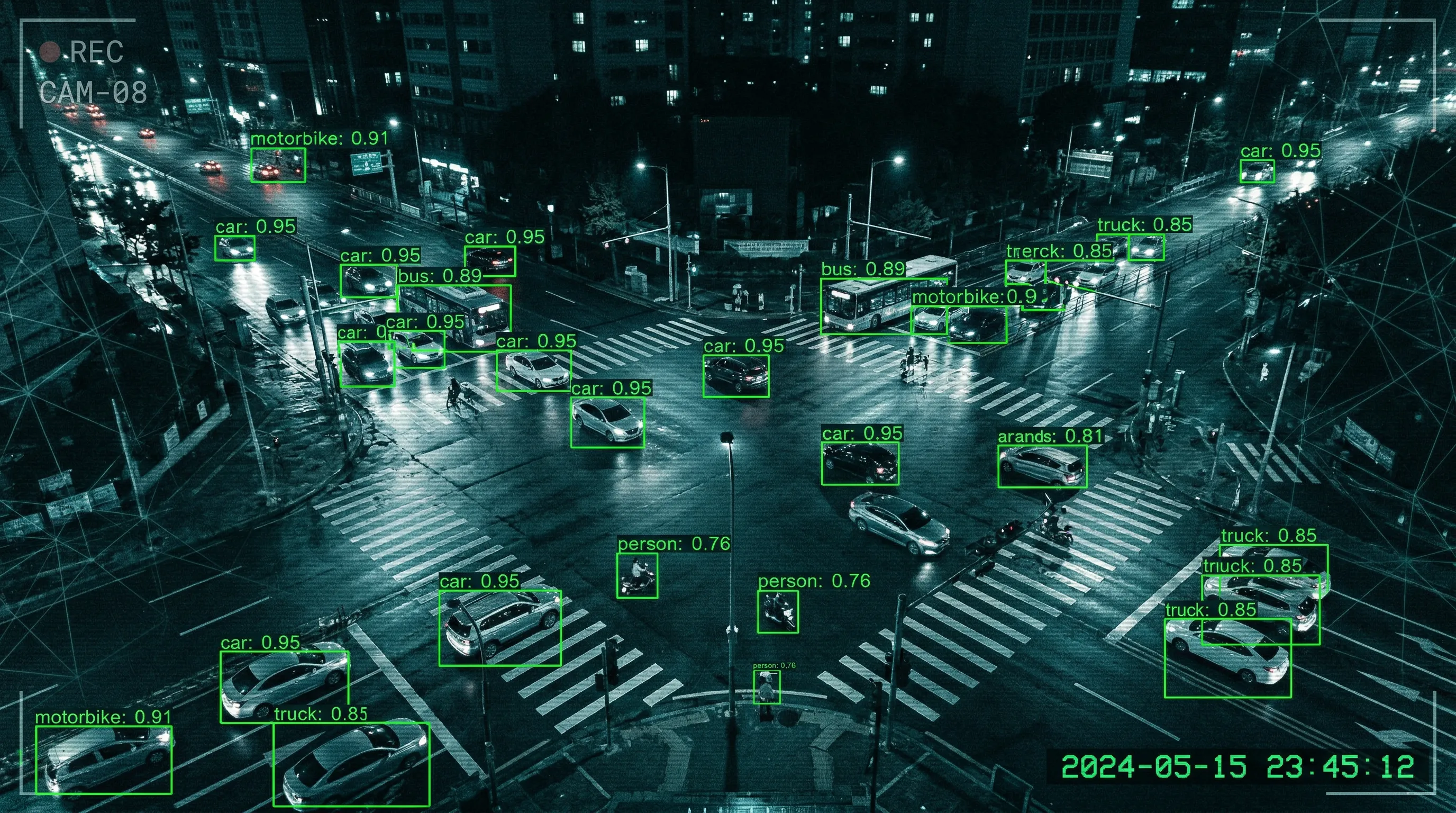
That single pass produces bounding boxes - rectangular overlays drawn around each detected object - along with a confidence score for each detection. The model essentially asks: is there an object here, what class does it belong to, and how certain am I? All of this happens in milliseconds per frame.
A final step called Non-Maximum Suppression cleans up overlapping detections, keeping only the highest-confidence bounding box when multiple candidates overlap the same object. The result is a clean, precise count of objects in the scene.
Why Speed Is the Point
For a live betting game, latency is everything. A system that takes two seconds to process a frame is useless when a betting window opens and closes in real time. YOLO's architecture was designed specifically for streaming video - processing at 30 frames per second or faster on modern hardware.
This is what separates CCTV games from live dealer games powered by human operators. A human reads a roulette wheel result once, manually. The AI reads every frame of a busy intersection continuously, producing a count that is both fast and - within the model's accuracy parameters - consistent.
155.io trains its detection models on the specific environments shown in each game. Rush Hour cameras capture intersections in Tokyo, London, Bangkok, and elsewhere - each with different vehicle types, road markings, and traffic densities. The model is calibrated per location to handle local conditions: Bangkok's motorcycle clusters behave differently in frame than London's double-decker buses.
The Industry Has Caught Up
At Global Gaming Expo 2025 in Las Vegas, AI was described by analysts as having moved from concept to core strategy across the casino sector. Solutions like SYNK Vision - which embeds facial recognition directly into slot machines and table games - showed that real-time computer vision is now operational infrastructure, not a prototype.
CCTV games represent a different application of the same underlying technology. Where casino surveillance uses object detection to flag fraud and monitor behaviour, 155.io inverts the premise: the AI detection output becomes the game result itself. The bounding box count is not a security report - it is the round outcome.
What This Means for Players
Understanding the AI layer matters for how you approach the game. The outcome is not random in the traditional RNG sense. It is the result of a real physical event - traffic moving through a real intersection - interpreted by a detection model with known accuracy characteristics. The game mechanics guide covers this in detail.
Two practical implications follow. First, the model can miscount in edge cases - vehicles partially in frame, occlusion from trucks blocking smaller objects, detection at the edge of the zone. These are rare but real. Second, environmental variables like rush hour timing, weather, and local events affect the physical scene, which in turn affects the count distribution. This is not a bug - it is the game.
The RTP structure accounts for count distribution across thousands of rounds. The house edge is built into the payout table, not into the AI itself. The AI just counts. What you bet on is whether you can read the scene better than the odds imply.
The Next Step in AI Gaming
YOLOv11, the current generation of the architecture, handles more complex scenes with better small-object detection than earlier versions - relevant as 155.io builds out locations like Taipei and Patong Beach where scooter clusters and pedestrian overlap create denser detection challenges. Each new game environment tests the model in new ways.
The trajectory is clear: as computer vision models get faster and more accurate, the range of physical environments that can support a live prediction game expands. Duck River already applies the same detection logic to a purpose-built lazy river. Snow Run will apply it to Alpine slope cameras. CCTV gaming is as much a computer vision story as it is a gambling one.
More News